WAMBAM
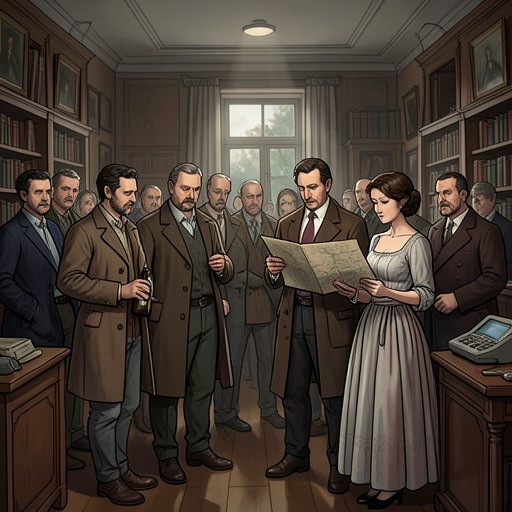
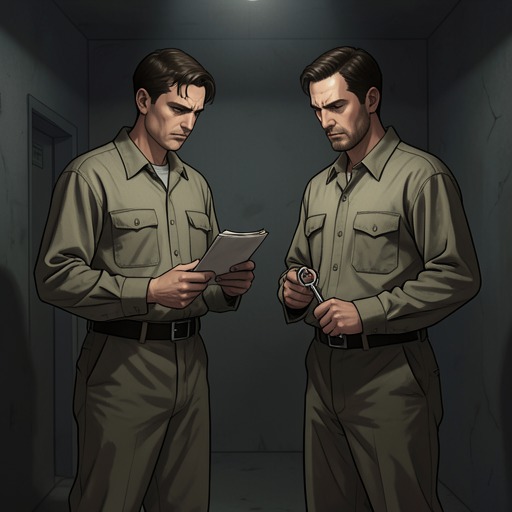
Inherent ViceWAMBAM, short for the Warriors Against the Man Black Armed Militia, is the armed organization associated with Tariq Khalil in Inherent Vice. Its place in the novel is defined by a practical and dangerous link: its members need Glen Charlock to arrange a small-arms deal, and that connection draws federal attention into Doc Sportello’s investigation. The group’s name and politics also become entangled with the era’s competing fantasies of militant rebellion and state security.
Identity and Political Context
WAMBAM is identified as Tariq’s people, a Black armed organization whose activity brings it within the attention of federal agents investigating Black nationalist groups. When agents question Doc, they point to Tariq’s visit to his office, the subsequent killing of one of Tariq’s prison acquaintances, and Mickey Wolfmann’s disappearance as a chronology that has made Doc relevant to their inquiry. Their questioning places WAMBAM within a wider climate of surveillance, but does not establish that the group was responsible for Wolfmann’s disappearance.
Doc later speculates that the FBI might frame Wolfmann’s disappearance as a Panther kidnapping, imagining a political explanation that could also serve as a cover story. The agents’ nervous glance at one another suggests that they have considered such an account; it does not confirm that WAMBAM or any other group carried out a kidnapping. The distinction matters: the organization’s armed identity makes it available as a suspect in official narratives even where the evidence in these scenes leaves the actual operation unresolved.
The Arms Deal and Glen Charlock
The group’s concrete role emerges when Tariq explains why he came to Doc. Because of the logistics, WAMBAM had to wait while Glen arranged the small-arms portion of a deal, and Tariq’s people were growing fretful. The delay gives the organization a specific stake in Glen’s work, rather than leaving it as a name attached only to federal suspicions.
Tariq tells Doc that Glen’s prospective arms-deal associates were a group of dentists on lower Sunset, operating out of an unusual building shaped like a large tooth. Doc recognizes the implication and thinks of places to investigate. The exchange connects WAMBAM’s need for weapons to the novel’s larger web of seemingly unrelated institutions and businesses, while making clear that the group’s plans depend on a chain of intermediaries and arrangements.
Surveillance and Manson Imagery
Tariq anticipates attention not only from the FBI but also from the LAPD’s Red Squad and Public Disorder Intelligence Division. He worries that an armed Black political organization will be folded into a wider, sensational account of rebellion, in which Charles Manson’s rhetoric is treated as a credible threat by police. His concern is not presented as proof that WAMBAM has a connection to Manson; it describes the political atmosphere in which official interpretation can enlarge or distort the meaning of the group’s activity.
The irony sharpens when Tariq says that WAMBAM’s own office displays T-shirts featuring Manson’s mug shots with Afros airbrushed onto them. The image turns a feared white criminal into a piece of Black militant pop iconography, at once provocative and unsettling. It echoes the very Manson-centered imagery Tariq fears the police will use, showing how symbols can circulate between political performance, popular culture, and law-enforcement suspicion.
Narrative Significance
WAMBAM is only briefly shown through reported conversations, but those references give the investigation a material political dimension: the organization needs arms, relies on Glen to help arrange them, and faces the prospect of overlapping federal and local scrutiny. Its delayed deal connects Tariq’s account to the mystery surrounding Glen’s work, while the FBI’s interest places Doc’s private investigation inside a much broader apparatus of surveillance.
The group’s Manson shirts crystallize the novel’s dark comic treatment of political symbolism. WAMBAM’s armed politics are real enough to provoke concern, but the surrounding institutions also interpret events through ready-made stories of rebellion and conspiracy. The resulting uncertainty is part of the organization’s narrative function: it is both an actor with a concrete logistical problem and an object onto which authorities and observers may project explanations the evidence does not settle.